


Sotheby's International Realty
- 13 Boulevard de l'Océan
- 33115 Pyla-sur-Mer, France
- +33 5 57 72 04 54
Sotheby's International Realty
- 186 bis route du Cap Ferret, Le Canon
- 33950 Lège-Cap Ferret, France
- +33 5 56 60 68 32
Sotheby's International Realty
- 40 Cours de Verdun
- 33000 Bordeaux, France
- +33 5 56 79 63 62
Your very first trip on the Cap Ferret Peninsula
Let's follow us !
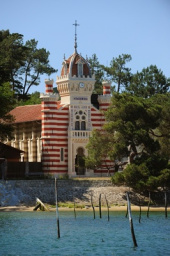
Cap Ferret: the little-known history of a coveted peninsula.
Nestled between the Arcachon Basin and the Atlantic Ocean, Cap Ferret has cultivated a unique identity for over a century, shaped by fishing, the forest and oyster farming, before becoming one of the most sought-after destinations on the French coast. How did this peninsula, long difficult to access, become such a discreet yet prized holiday destination? Come along… we’ll tell you all about it!
Before 1850, the peninsula was only visited seasonally by fishermen and hunters who travelled by boat from La Teste-de-Buch. It was around 1860, when the government began granting oyster-farming concessions, that the first wooden huts appeared on the shores of the Bassin, giving rise to the villages of Le Canon and L’Herbe. The development of oyster farming thus shaped the peninsula’s first villages, whilst the first holiday homes in turn began to appear on the shores of the Bassin. In L’Herbe, the entrepreneur Léon Lesca left a lasting mark on the area’s history: from 1864 onwards, he developed a vast estate there comprising an imposing Moorish-inspired villa, a school, housing and a chapel. The Villa Algérienne was demolished in the 20th century, but the Sainte-Marie-du-Cap chapel remains today as the last vestige of this exceptional complex, listed as a Historic Monument since 2008.
In the 20th century, a new clientele in turn discovered Cap Ferret. On 12 October 1908, the 44-hectare district was sold at auction: this was the founding event that saw the arrival of the very first permanent residents of the village of Cap Ferret. In 1919, a further 493 hectares were sold, paving the way for the peninsula’s development along its length thanks to the road linking Cap Ferret to Grand Piquey. From the 1950s onwards, the boom in the northern part of the peninsula also gathered pace, driven by a new road that made it easier for people from Bordeaux to reach the area. Holiday homes thus gradually sprang up in the heart of the forest, tracks and access roads were developed, and the peninsula cultivated a unique way of life, based on its proximity to the Bay, the ocean and nature.
An administrative turning point brought this history to a close in 1976. Until then, the peninsula had been divided between two municipalities: to the north, Lège; to the south, the villages of Grand Piquey, Piraillan, Le Canon, L’Herbe, La Vigne and Cap Ferret fell under the jurisdiction of La Teste-de-Buch. After several decades of debate and negotiations, the decree of 21 June 1976 officially attached these territories to the municipality of Lège, thereby uniting the entire peninsula under a single administration. Five years later, in 1981, the municipality officially adopted the name Lège-Cap Ferret. A new local authority was thus established, uniting the historic town of Lège and the villages of the peninsula around a shared identity, whilst preserving the unique character of each.
This development partly explains Cap Ferret’s current appeal. Unlike certain seaside resorts where holiday life is on full display, the peninsula cultivates a more understated elegance: houses are tucked away beneath the pine trees, people happily get about by bicycle, and the oyster-farming villages continue to lend the area an authentic atmosphere. Set between the ocean, the Arcachon Basin and wooded areas, available land remains limited, which explains why the best-located properties are now among the most sought-after on the coast.
To understand this identity, let’s set off from the Thiers jetty in Arcachon for the crossing that always marks the start of any exploration of Cap Ferret: heading for the Bélisaire jetty, then, travelling northwards, Le Canon and L’Herbe, before heading back down via Bélisaire towards the 44-hectare pine forest, the headland and the lighthouse, all the way to the vastness of the ocean.
The crossing from the Thiers jetty
It all begins at the Thiers Jetty, in the heart of Arcachon, from where the speedboats depart to link the town with Cap Ferret. It takes just a few dozen minutes by boat to reach Bélisaire Jetty, and as you move away from the shore, the landscape gradually reveals itself: the pine trees appear behind the first houses, the huts take shape along the opposite bank and the outline of the peninsula gradually comes into focus.
This crossing gives you an immediate sense of Cap Ferret’s exceptional geography. The peninsula forms a narrow strip of land separating two worlds: the calm waters of the Bassin on one side, and the waves of the Atlantic on the other. For a long time, the sea was the main means of access to this relatively isolated area, and even today, travelling to Cap Ferret by boat allows you to recapture something of that original connection to the peninsula: a gradual, almost theatrical arrival, during which the landscape gradually unfolds before your eyes.
The peninsula offers a thousand and one ways to enjoy moments between the ocean and the Bassin, from strolls through the oyster-farming villages to exploring the lighthouse. Disembarking at Bélisaire thus offers a particularly elegant first glimpse of Cap Ferret: an arrival by water, to the rhythm of the Bassin, before walking beneath the pine trees.
Source: https://www.arcachon.com/tourisme/je-decouvre/lieux-dexception/cap-ferret/
Once you’ve disembarked at Bélisaire, head north for the first part of the trip: it is here, between Le Canon and L’Herbe, that the peninsula reveals its oyster-farming heritage. The distance is around ten kilometres, which can easily be covered by bike along the cycle path that runs alongside the Bassin, or by car along the road through the pine forest. Shuttle buses and local bus services also provide access to the villages for those who prefer to leave their car behind.
Le Canon: discover the oyster-farming spirit of the Cap Ferret peninsula
Le Canon, the northernmost of the oyster-farming villages on our tour, is one of the must-see stops on a first visit. Built in the 19th century on rock fill gradually accumulated by oyster farmers, the village owes its existence to concessions granted by the State from 1860 onwards. Its wooden huts, harbour and narrow streets tell the story of the Cap Ferret peninsula before the rise of large-scale holiday resorts.
Here, oyster farming has shaped the landscape and local life. The huts were once primarily workplaces where oyster farmers sorted, stored and prepared the oysters from the Bassin. Some have since been repurposed, but their architecture and waterside location have preserved this heritage. The oyster-farming villages of Cap Ferret thus constitute a living heritage: unlike some historic sites that have become purely tourist attractions, Le Canon remains closely linked to a very real oyster-farming industry. It is precisely this that gives the village its character.
A stroll along the coastline gives you the chance to take in the sight of the huts, boats, oyster-farming facilities and small houses that line the shores of the Arcachon Basin. The tourist map of the Arcachon Bay identifies Le Canon as one of the peninsula’s main oyster-farming villages, alongside Piraillan, L’Herbe and other villages dotted along the coast. Since 18 June 1981, Le Canon and L’Herbe have, in fact, been among the eight oyster-farming villages officially listed in the inventory of exceptional sites in the Gironde, alongside Le Four, Les Jacquets, Petit and Grand Piquey, Piraillan and La Douane. Here one finds an atmosphere that the large seaside resorts have sometimes lost: that of a village where traditional ways of life remain visible and where the connection to the sea is ever-present.
For visitors, Le Canon is therefore an essential gateway to understanding Cap Ferret: before becoming a sought-after destination, the peninsula was first and foremost a place of work. From there, it’s simply a matter of following the cycle path or the road southwards for a few kilometres to reach L’Herbe.
L’Herbe: the iconic village of the Bassin
Heading south from Le Canon, you soon reach L’Herbe. With its colourful cottages, narrow alleyways and location right on the edge of the Bassin, the village is one of the most photographed spots on the peninsula. But L’Herbe has a significance that goes far beyond its aesthetic appeal.
It is here that one of the most significant reminders of Cap Ferret’s history can be found: the Sainte-Marie-du-Cap chapel, the last remaining part of the vast estate envisaged by Léon Lesca in the 19th century. The village thus offers an insight into a pivotal moment in the peninsula’s history: the period when the oyster-farming area began to attract a new clientele and the first large holiday estates began to appear. The contrast is particularly striking: just a few metres from the modest oyster huts stands a building whose architecture evokes a completely different world.
The Sainte-Marie-du-Cap Chapel, a reminder of the Villa Algérienne
In the 19th century, Léon Lesca acquired a vast estate at L’Herbe and developed a spectacular property there. A civil engineering contractor who had returned from Algeria, he commissioned the construction of a grand Moorish-style residence nicknamed the ‘Palace of the Pashas’. Around this villa, he envisaged a veritable estate comprising, in particular, a school, a vicarage, staff accommodation and a park planted with rare species.
The Sainte-Marie-du-Cap Chapel is now the only remaining part of this complex. Built in 1884–1885 by the architect J.E. Ormières, it reflects the Orientalist style that was very much in vogue in the Arcachon Basin during the second half of the 19th century. Its decoration blends Arabic motifs with Christian symbols, giving it a particularly distinctive architectural identity. The Villa Algérienne was demolished in the 1960s; the chapel, however, remains and was listed in its entirety as a Historic Monument in 2008.
Source: https://pop.culture.gouv.fr/notice/merimee/PA33000107
An unmissable stop to understand that the Cap Ferret peninsula was not built solely around tourism: its history is first and foremost that of a working region, of entrepreneurs and families living in tune with the rhythm of the Bassin. L’Herbe is probably the place where this coexistence between working-class heritage and holiday resorts is most strikingly evident.
From L’Herbe, the cycle path heading south leads to the Bélisaire jetty, some ten kilometres away.
The Bélisaire jetty: the heart of the peninsula
After Le Canon and L’Herbe, the route naturally leads back to the village of Cap Ferret and its Bélisaire jetty, where the journey from Arcachon began. This is where the heart of the peninsula beats: its shops, market and small restaurants bring the village to life all year round, whilst the Cap Ferret tram, still in service today, connects the jetty to the ocean beaches. (In summer only)
The village of Cap Ferret enjoys a dual identity: on one side, the Bassin and its oyster huts; on the other, the ocean and its beaches, linked by this narrow strip of land and sand, which we now continue to explore southwards before reaching the ‘44 hectares’.
The ‘44 hectares’ neighbourhood: rediscovering Cap Ferret’s natural side
As you continue towards the headland, the atmosphere changes: the forest gradually takes over and the houses seem to hide beneath the pine trees. The ‘44 hectares’ thus offer a more secluded view of the peninsula. The neighbourhood takes its name from the former forest estate sold at auction on 12 October 1908, which saw the first permanent residents settle in the village of Cap Ferret; today it is particularly sought-after for its natural surroundings, its dirt tracks and its intimate atmosphere.
Here, the buildings are unobtrusive. The holiday homes that gradually appeared during the 20th century blend into the forest rather than seeking to dominate it: timber, vegetation, terraces and views of the landscape combine to create a deliberately understated architectural style. This relationship between architecture and nature has become one of Cap Ferret’s defining features, and also explains the high value placed on properties in the area. Across the 44 hectares, rarity lies not only in the house itself: it resides in the plot, in its immediate surroundings, in the distance from neighbours, and in the possibility of maintaining a genuine sense of seclusion and absolute tranquillity.
The high-end property market in Cap Ferret is particularly characterised by this demand. Properties on the seafront or enjoying a prime location are extremely rare and can command very high prices. Le Monde notably highlighted the particular appeal of the villas within the 44-hectare estate, where the scarcity of land and the desire for privacy contribute to their value.
It is also in this area that one comes to understand why the peninsula has long appealed to those seeking a different relationship with time: less ostentation, more nature, light and simplicity. This philosophy has gradually made Cap Ferret a sought-after destination for a particularly affluent clientele and several French celebrities. Their presence has contributed to the area’s reputation, but it is above all part of a deeper characteristic of the peninsula: the opportunity to live in a privileged and secure environment whilst maintaining genuine discretion.
Then the forest gradually gives way and, at the tip of the peninsula, two horizons come into view.
The tip of Cap Ferret: between the Arcachon Bay and the ocean
At the tip, the landscape reaches its most spectacular expression: on one side, the Arcachon Basin; on the other, the vastness of the Atlantic. This meeting of two landscapes alone encapsulates the uniqueness of Cap Ferret. Here, the peninsula is reduced to a strip of sand between two worlds, constantly shaped by the tides, currents, winds and the shifting coastline.
It is also one of the best places from which to understand the geography of the Arcachon Basin. Opposite Cap Ferret lie, in particular, the Dune du Pilat, the Banc d’Arguin and the channels linking the Basin to the ocean.
The headland thus offers a different perspective on the landscape. After exploring the oyster-farming villages and the traces of its history, one discovers here a wilder side of Cap Ferret, dominated by the elements. It is also this exceptional geographical character that contributes to the symbolic value of the properties situated in this part of the peninsula: owning a house here means enjoying an exceptional connection with the landscape, but also an environment whose rarity is intrinsically linked to the very geography of the site and its fragility.
To fully appreciate this landscape, one final stop is a must:
The Cap Ferret lighthouse: gaining a bird’s-eye view
It is impossible to talk about Cap Ferret without mentioning its lighthouse. The first lighthouse was built in the 19th century to ensure safe navigation at the entrance to the Bassin. Destroyed in 1944, it was rebuilt between 1946 and 1948, roughly following the plans of its predecessor. The current structure, recognisable by its red and white silhouette, is now listed in its entirety as a Historic Monument.
Source: https://pop.culture.gouv.fr/notice/merimee/PA33000114
Standing 53 metres tall, it dominates the landscape of Cap Ferret and is one of the most iconic landmarks of the Arcachon Basin. After climbing 258 steps, the panoramic view more than makes up for the climb: from the gallery, the view takes in the Arcachon Basin, the Dune du Pilat, the channels, the oyster beds, the ocean and the peninsula.
But the lighthouse is also worth seeing in its own right. Its entrance hall features a mosaic depicting the Arcachon Basin and the peninsula, created by the mosaic artist Auguste Labouret, as well as busts of Fresnel and Beautemps-Beaupré. The former, a French physicist, invented the lens that is still used today in most of the world’s lighthouses, whilst the latter, a hydrographer and cartographer, is regarded as the father of modern hydrography
It is probably here, at the very tip of the peninsula, that one gains the best understanding of Cap Ferret. From this vantage point, the various stages of the walk take on a new dimension: the oyster-farming villages appear as traces of a maritime history, the pine trees serve as a reminder of the forest’s ever-present presence, and the ocean reveals the fragility of this narrow strip of land and sand.
Why has Cap Ferret become such a sought-after destination?
Cap Ferret’s success is not solely down to its landscapes. It rests on a combination that has become particularly rare along the French coastline: a preserved and safe area, a strong architectural identity, a high proportion of second homes, and a property market naturally limited by the geography of the peninsula.
The cottages and villas are rarely designed as mere urban properties. Many blend into the pine forest, make use of timber and maintain a close relationship with the landscape. This architecture itself contributes to the area’s identity: in Cap Ferret, luxury is generally not found in a monumental façade or an ostentatious address, but in a discreet house hidden behind the pine trees, a terrace overlooking the Bassin, direct access to the beach, or the ability to cycle to the villages.
The high-end property market reflects this unique character. The best-located properties are rare, and their value depends heavily on their surroundings, their proximity to the Bassin or the ocean, and their ability to preserve that sense of privacy. Both *Le Monde* and *Le Figaro Immobilier* have highlighted the strong appeal of properties in Cap Ferret, particularly in the most secluded areas close to the water.
This desire for discretion also explains Cap Ferret’s appeal to many celebrities: actors, singers, journalists, sports stars and entrepreneurs have found a refuge there, far from the hustle and bustle of the major seaside resorts. The press notably links this appeal to celebrities such as Marion Cotillard, Guillaume Canet, Audrey Tautou, Pascal Obispo and Laurent Delahousse. But their presence is ultimately just one symptom of a broader appeal: what these celebrities seek in Cap Ferret is precisely what many property buyers are looking for: nature, privacy, distinctive architecture and the feeling of being able to live, for a few moments, outside the flow of time.
Here, a house is therefore about more than just its floor area. It offers a way of life: opening your shutters to look out over the pine trees, walking or cycling to the Bassin, having lunch with a view of the oyster huts, and ending the day by the ocean. It is this combination of nature, heritage, exclusivity and lifestyle that explains the peninsula’s exceptional appeal today.
Our recommendation from Sotheby’s International Realty: take your time exploring Cap Ferret…
If we had to recommend just one way to explore Cap Ferret, it would be to take the time to follow its own rhythm rather than trying to cram in as many stops as possible. Start by boarding a boat at the Thiers jetty in Arcachon, heading for the Bélisaire jetty.
Once you’ve disembarked, hire a bike or head north along the road for about ten kilometres to Le Canon: take the time to explore the harbour and admire the oyster huts. Then head back down towards L’Herbe, a few kilometres to the south: wander through the narrow streets, explore the colourful huts and take the time to admire the Sainte-Marie-du-Cap chapel, a precious reminder of the history of Léon Lesca and the Villa Algérienne — one of the few listed historic monuments on the peninsula.
Continue your journey southwards, passing once more by the Bélisaire jetty – the heart of the peninsula – before reaching the 44 hectares, where the forest is gradually reclaiming its territory. Here, take the time to slow down, as Cap Ferret is best discovered not only through its landscapes but also through its little details: a wooden fence, a house hidden amongst the vegetation, a path leading to the Bassin, or a terrace glimpsed between two pine trees.
Finally, make your way to the headland and the lighthouse at the southern tip of the peninsula to end your walk facing the vast expanse of the Bassin and the ocean. This route allows you to discover Cap Ferret in the right order: that of the crossing, history and landscape — first the Thiers jetty and the arrival at Bélisaire; then oyster farming, heading northwards to Le Canon and then to L’Herbe; the holiday resorts and heritage, including the Sainte-Marie-du-Cap chapel; then, heading back south, the forest and the unspoilt landscapes of the 44 hectares; finally, the headland and the lighthouse, which offer an insight into the peninsula’s exceptional geography.
Cap Ferret: a living heritage
What makes Cap Ferret so unique is precisely this continuity between past and present. Its heritage is not confined to a few isolated monuments: it can be discovered in an oyster-farming hut, a narrow alleyway, a chapel, a house hidden behind the pine trees or a lighthouse overlooking the ocean.
The Sainte-Marie-du-Cap Chapel and the lighthouse are the two main listed historic monuments that tell this story. The former bears witness to the era of the grand 19th-century holiday estates; the latter recalls Cap Ferret’s strategic role in navigation at the entrance to the Bassin. But the heritage of the Cap Ferret peninsula is also more subtle: it lies in the oyster-farming villages, the wooden huts, the wooded landscapes and the residential architecture that has gradually developed without completely erasing the peninsula’s natural character.
The peninsula has, of course, changed. The holiday industry has grown, visitor numbers have increased, and Cap Ferret has established itself as one of the most sought-after destinations on the French coast, which has also intensified pressure on a property market characterised by a severe shortage of properties in this small area. Yet the area’s identity remains deeply rooted in its origins: the bay, the forest, oyster farming and the ocean continue to define its landscape and way of life.
Cap Ferret: a place where heritage and way of life are one and the same
To discover Cap Ferret is, ultimately, to discover far more than just a seaside destination. It is to explore the history of a long-isolated peninsula, shaped by the Bassin, transformed by oyster farming and then embraced by visitors seeking a different relationship with time and nature. From the crossing from the Thiers jetty to the huts at Le Canon, from L’Herbe and its chapel to the Bélisaire jetty, from the pine trees across the 44 hectares to the headland and the lighthouse, each stage reveals a facet of this identity.
More than a century after the peninsula’s first major transformations, the spirit remains: that of a place where people come for the landscape, but stay for the atmosphere. This atmosphere also explains why Cap Ferret now holds a special place in the collective imagination of French luxury. The prominent figures who stay there or own a property there contribute to its reputation, but seek above all that which the area offers most preciously: discretion, nature and a form of simplicity that has become rare in the most renowned seaside destinations.
At Sotheby’s International Realty, we believe that luxury property is never simply about a property: it is also an address, a history, a setting and a way of life. In Cap Ferret, this aspect takes on its full meaning — here, heritage and nature play a vital part in the identity of a destination that has become unique on the French coast.
FAQ: frequently asked questions about Cap Ferret
What is the best way to explore Cap Ferret?
For a first visit, we recommend starting at the Thiers jetty in Arcachon, crossing over to the Bélisaire jetty, then heading north to Le Canon and L’Herbe before heading back down via Bélisaire towards the 44 hectares, the headland and the lighthouse. This route avoids unnecessary back-and-forth journeys and follows the natural layout of the peninsula. Between each stop, allow for a few kilometres, which can be easily covered by bike along the cycle path running alongside the Bassin, or by car via the road through the pine forest.
Source: https://www.arcachon.com/tourisme/je-decouvre/lieux-dexception/cap-ferret/
What are the must-see attractions in Cap Ferret?
For a first visit, we recommend focusing on a few iconic sites rather than trying to cover the whole peninsula. The Bélisaire jetty, Le Canon, L’Herbe and its Sainte-Marie-du-Cap chapel, the 44 hectares, the headland and the lighthouse make up a route that is particularly representative of Cap Ferret’s history and identity.
Why visit Le Canon?
Le Canon is one of the best places to discover the peninsula’s oyster-farming heritage. Its harbour and wooden huts allow you to experience the atmosphere of the old fishing and oyster-farming villages that shaped Cap Ferret before the development of the holiday resort.
Why is L’Herbe a must-see?
L’Herbe brings together many of the elements that define Cap Ferret’s identity: oyster huts, narrow streets, the Bassin and historical heritage. Above all, the village is home to the Sainte-Marie-du-Cap chapel, the last remaining vestige of Léon Lesca’s estate, now listed in its entirety as a Historic Monument.
Source: https://pop.culture.gouv.fr/notice/merimee/PA33000107
Can you visit the Villa Algérienne?
No, the Villa Algérienne was demolished in the 1960s. However, the Sainte-Marie-du-Cap Chapel, built on Léon Lesca’s estate in the 19th century, can still be seen in L’Herbe and is the main surviving architectural feature of this property.
How do you get around the villages of Cap Ferret?
Cycling remains the most enjoyable way to travel between the villages: a cycle path runs alongside the Bassin and serves Bélisaire, Le Canon and L’Herbe, amongst others. You can also explore the peninsula by car via the road that cuts through the pine forest, whilst shuttle buses and local bus routes connect the various villages for those who prefer to leave their car behind.
What are the key dates in the history of Cap Ferret?
Before 1850, the peninsula was visited only seasonally by fishermen and hunters. Around 1860, the State began granting oyster farming concessions, leading to the establishment of the villages of Le Canon and L’Herbe. In 1864, Léon Lesca began developing his estate at L’Herbe, where the Sainte-Marie-du-Cap chapel was built in 1884–1885. On 12 October 1908, the 44-hectare plot was sold at auction, marking the arrival of the first permanent residents in the village of Cap Ferret. In 1919, a further 493 hectares were sold, encouraging the development of the peninsula towards the north. From the 1950s onwards, a new road accelerated the growth of this same northern sector. Finally, on 18 June 1981, eight oyster-farming villages on the peninsula, including Le Canon and L’Herbe, were listed in the inventory of exceptional sites in the Gironde.
What is the history of Cap Ferret?
Cap Ferret remained a remote area for a long time, inhabited mainly by fishermen, hunters, oyster farmers and resin collectors. In the 19th century, the boom in oyster farming gradually transformed the peninsula and led to the emergence of several villages; at the same time, holiday estates began to appear, such as Léon Lesca’s estate in L’Herbe. In the 20th century, holiday homes began to spring up in the forest and Cap Ferret gradually became a holiday destination. This history explains the peninsula’s current identity, which blends oyster-farming heritage, nature and the art of living.
Why is Cap Ferret different from Arcachon?
Arcachon developed in the 19th century as a seaside and health resort centred around urban neighbourhoods and numerous villas. Cap Ferret has evolved more gradually, long linked to oyster farming, fishing and the forest, which explains its more natural character and the prominence of the oyster-farming villages and houses nestled amongst the pine trees, with a ‘hut-like’ feel that is as chic as it is bohemian.
Can you get to Cap Ferret from Arcachon by boat?
Yes. Speedboats depart from the Thiers jetty in Arcachon and take just a few tens of minutes to reach the Bélisaire jetty at Cap Ferret, whilst there are also seasonal services to other parts of the Bassin. This crossing is an excellent way to begin exploring the peninsula and allows you to enjoy the Bassin’s scenery from the very first moments.
How much time should you allow to explore Cap Ferret?
A day is enough to see the main highlights of the route, including Le Canon, L’Herbe, the 44 hectares and the lighthouse. However, to really soak up the atmosphere of Cap Ferret, two or three days allow you to take things at a more leisurely pace, explore more of the peninsula by bike and spend more time in the oyster-farming villages and on the beaches.
Can you visit the Cap Ferret lighthouse?
Yes, the lighthouse is open to the public and is one of the peninsula’s most iconic landmarks. Climbing its 258 steps offers an exceptional panoramic view of the Arcachon Basin, the Dune du Pilat, the passes, the ocean and the peninsula. It is also listed in its entirety as a Historic Monument.
Source: https://pop.culture.gouv.fr/notice/merimee/PA33000114
Why are properties in Cap Ferret so sought-after?
Their value stems from several factors: the scarcity of land, the low density of certain areas, the natural environment, the proximity to the Arcachon Basin or the ocean, and the growing desire for privacy. Properties in the most sought-after areas, particularly those boasting an exceptional location or direct access to the countryside, are exceptionally rare — a combination of location, natural beauty and privacy that explains their appeal to an international clientele and French celebrities.
Why do celebrities love Cap Ferret so much?
Cap Ferret offers something relatively rare: a destination that is well-known without being entirely built around high society life. The pine forests, oyster-farming villages, beaches and cycle paths help to preserve a sense of privacy. Several figures from the worlds of film, music, television and business stay there or own a home there, which contributes to the area’s reputation — but it is precisely the lack of ostentation that seems to be one of the peninsula’s main attractions.
When is the best time to visit Cap Ferret?
Summer is obviously the liveliest season, with a particularly vibrant atmosphere in the villages, on the beaches and around the Bassin. Spring and early autumn offer a more peaceful atmosphere, ideal for exploring the oyster-farming villages and cycling around the peninsula. Finally, winter reveals a more intimate and untamed Cap Ferret, where you can perhaps most clearly sense the peninsula’s original character.
The landmarks that tell the story of Cap Ferret
For a visitor unfamiliar with the peninsula, three landmarks are particularly helpful in understanding its history:
- The Sainte-Marie-du-Cap Chapel in L’Herbe: the last remaining part of Léon Lesca’s estate, it bears witness to the emergence of large holiday estates in the 19th century and is listed as a Historic Monument.
- The Cap Ferret lighthouse: originally built in the 19th century and then rebuilt after the Second World War, it serves as a reminder of the strategic importance of navigation at the entrance to the Bassin. It too is listed as a Historic Monument.
- The oyster-farming villages of the Bassin, notably Le Canon and L’Herbe: whilst they are not monuments in the legal sense of the term, they constitute a living heritage that is essential to understanding the peninsula’s identity.
Ultimately, it is this combination that makes Cap Ferret so special: a relatively unobtrusive architectural heritage, but an ever-present, living landscape. And this is precisely what sets the peninsula apart from a traditional seaside resort. People do not come here simply to see a lighthouse or a chapel: they come to discover an entire region, where the houses, pine trees, huts, beaches and monuments all tell the same story
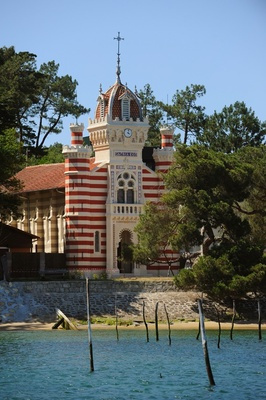
Cap Ferret: the little-known history of a coveted peninsula. Nestled between the Arcachon Basin and the Atlantic Ocean, Cap Ferret has cultivated a unique identity for over a century, shaped by fishing, the forest and oyster farming, before becoming one of the most…
Read more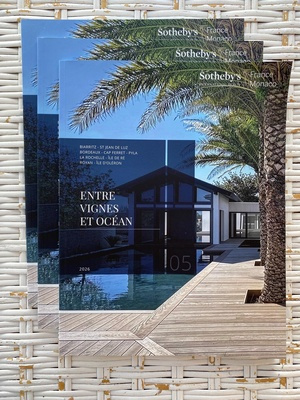
Our 2026 Regional Magazine is out now at all our offices on the Atlantic coast! It features a selection of high-end properties for sale, must-see places to explore, great restaurants to enjoy, unique encounters and daring discoveries. Homes ‘for sale’ – or rather,…
Read more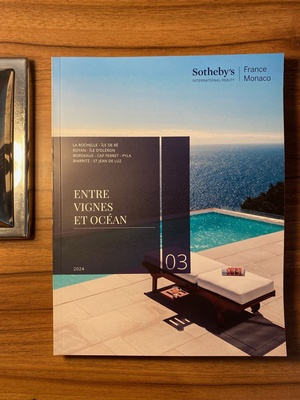
Our regional magazine 2024 is now available! It offers you a selection of properties for sale, must-see addresses, restaurants, meetings and discoveries. You will discover superb places to live offered by our La Rochelle Sotheby's Intl Realty, Ile de Ré Sotheby's...
Read more